
The Issue of Fish Farming in Public Debate
The “PinkBombs” campaign aims to create the world’s first platform for visually quantifying the impacts of salmon farming. This second installment seeks to update the baseline data collected in 2024, while introducing a new category dedicated to health, focusing on PFAS and omega-3s.
To directly engage citizens in protecting the ocean, the website now features a calculator for the general public that allows everyone to measure the exact impact of their own consumption.
The Impact of a Devastating Industry
Intensive salmon farming has dramatic systemic consequences. In terms of biodiversity and social justice, this industry exploits Antarctic krill on a massive scale and places a heavy burden on wild fish populations: up to 144,000 metric tons are caught annually in West Africa to feed Norwegian fish farms, directly threatening the food security of local communities.
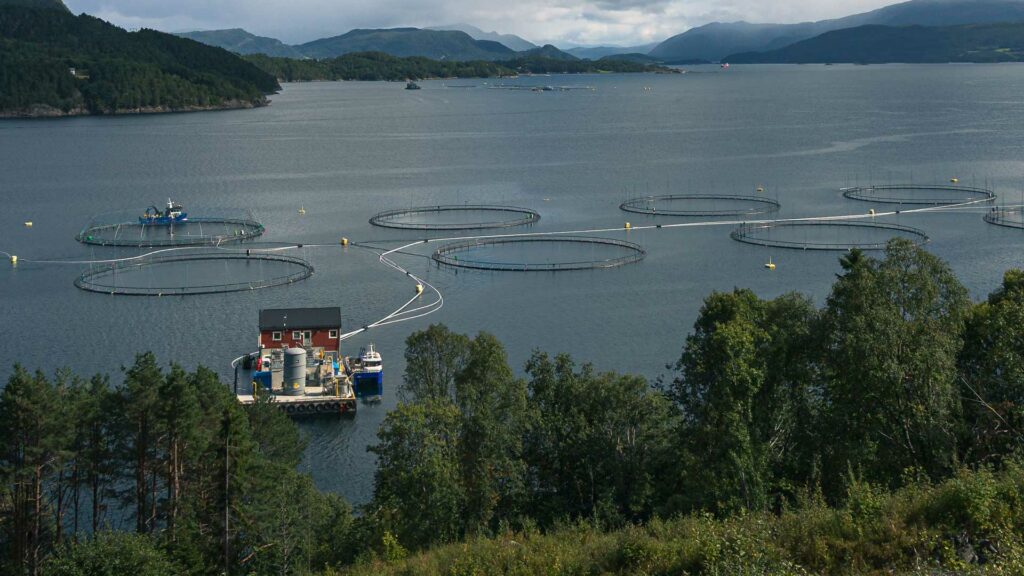
Furthermore, high stocking densities in cages lead to abnormally high mortality rates and the proliferation of parasites, requiring the widespread use of chemical treatments. These organic pollutants, combined with microplastics, inevitably end up in the flesh of the fish we consume. Finally, the climate bears the brunt of greenhouse gas emissions from food production, transportation, and the decomposition of organic waste associated with these farms.
A Transparent Scientific Approach
To transform this raw data into concrete advocacy tools, PinkBombs has adopted a rigorous, peer-reviewed scientific approach grounded in international research.
Open source
All of the statistical data is freely available to the general public.
Collaborative
Citizens and experts are invited to contribute to refining the tools.
Dynamic
The database is continuously updated to incorporate new research.
Check out the Salmon Health Report
At the same time, Kresk 4 Oceans is supporting SEASTEMIK in the preparation of a report on intensive fish farming in aquaculture.